My favorite pastime is traveling the country in our RV. I enjoy visiting new and interesting places, and experiencing new adventures in the RV. I also enjoy keeping up with my favorite satellite programming during our RV road trips. There is nothing quite like settling in the RV at night and watching your favorite show or a good movie on TV. The last thing you want to do is ruin your evening trying to set-up the satellite antenna, or acquire a good signal.
What I want in our RV is a super simple portable RV satellite solution. After some research I discovered the Carryout G2+ automatic satellite antenna by Winegard.
Let’s start by looking at a few concerns you might encounter with RV travel and satellite TV reception:
- Ease of set-up
- Accessing the satellite signal
- Viewing TV using more than one satellite receiver
Ease of Set-Up
If you’re like me you don’t want headaches and stress when it comes to setting up a satellite system in the RV.

Switches to change satellite provider
I found the Carryout G2+ set-up to be really easy. You make a few simple connections and before you know it you are watching your favorite TV program. The G2+ system is compatible with multiple satellite providers. We use Direct TV and that is the default setting on the power inserter, but it can easily be changed. Just follow the settings in the instructions to change the switches to a different provider.
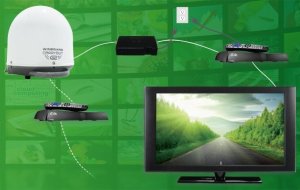 Next you simply connect the supplied 25’ coax between the G2+ and the power inserter, connect the 3’ coax between the power inserter and your receiver, and connect an HDMI or coax from the receiver to the TV. After the connections are made power up the receiver, the TV and the power inserter and the automatic antenna will start searching for a signal. That’s all there is to it. It literally took less than 20 minutes to set the system up right out of the box.
Accessing the Satellite Signal
One thing I really like about the Carryout G2+ is that it’s portable.
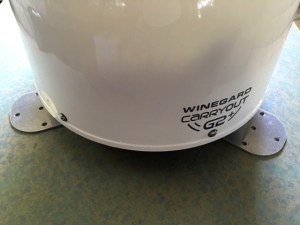 It works great for RVs, and it can be used on other camping trips, for tailgating, backyard BBQs and more. The G2+ also offers several mounting options. Some options include temporary tripod and window mounts and there are more permanent roof, ladder and vehicle mounts. My primary goal was to use the G2+ on the RV so I opted to convert the portable Carryout G2+ into a permanent roof mount using the roof mount kit available from Winegard.
 The G2+ features the latest technology in satellite acquisition. It is small, but powerful and it is fully automatic. What that means is after the connections are made the automatic antenna quickly goes to work locating the maximum signal strength. Keep in mind if there are trees, buildings or other obstacles in the path no satellite antenna will get a signal, but with a clear unobstructed view to the southern sky the G2+ quickly locks in on the strongest signal.
Viewing TV using more than one Receiver
For the past 8 years or so we used and enjoyed an older Winegard satellite antenna on our RV. It works great, but one disadvantage is you can only connect the antenna to one satellite receiver in the RV. This meant if someone was watching TV in the living room and someone else was watching TV in the bedroom both viewers had to watch the same channel. When we decided to upgrade the antenna one requirement was the new antenna needs to have the capability to connect to two receivers in the RV.
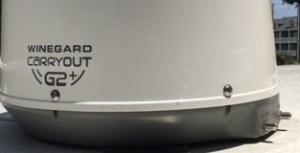 The Carryout G2+ solved this concern too. The antenna has two output connectors, one for the main receiver connection and another for a second receiver. You simply run a separate coax from the second antenna port to another receiver in the RV. Now you can view any program you want on both TVs as long as both programs are on the same satellite.
If a portable satellite antenna is the best choice for you, based on your needs, I highly recommend the Winegard Carryout G2+. It works great for someone on-the-go and as a temporary or permanently mounted antenna for your RV. The G2+ is compact in size, easy to connect, and easy to use. It really is a super simple portable satellite solution.
For more information on the Winegard Carryout G2+ and other satellite solutions visit www.winegard.com
Subscribe to our RV 101® Youtube Channel

Happy RV Learning,
Mark Polk
 There has always been confusion when it comes to the type of tires used on travel trailers and 5th wheel trailers, or any type trailer for that matter. I think lots of folks are somewhat familiar with what are referred to as P-rated (passenger) or LT-rated (Light Truck) tire designations because that is what we use on our automobiles, SUVs and trucks. When you purchase a travel trailer or 5th wheel trailer and the time comes to purchase new tires people are confronted with a new type of tire designation, ST-rated or “Special Trailer” tires.
 When summer temperatures arrive you want to make sure your RV refrigerator can deal with the heat. Today I would like to offer some tips and tricks so the RV refrigerator can do its job more efficiently.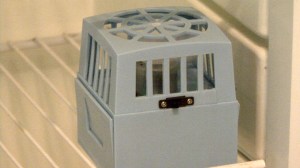
 Heat created by the cooling process is vented behind the refrigerator. Periodically inspect the back of the refrigerator and the roof vent for any obstructions like bird nests, leaves or other debris that might prevent heat from escaping. The outside temperature directly affects the operation and efficiency of your RV refrigerator too. When it’s hot out try parking your RV, with the side the refrigerator is on, in the shade.
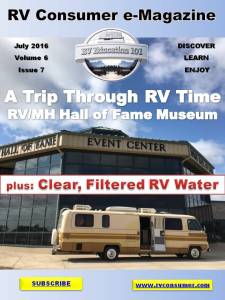 In this special edition of RV Consumer Magazine readers can take a trip through RV time at the RV/MH Hall of Fame Museum, and read an informative article on how to protect your RV water system. You can also test your RV knowledge by playing a crossword puzzle on RV fresh water systems.
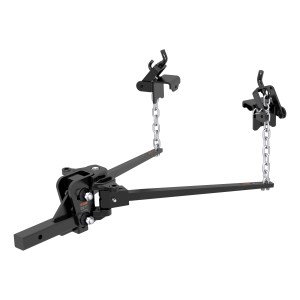 Question: I read an article you wrote about the ideal ratio of hitch weight to overall trailer weight. The numbers you gave for trailer tongue weight were 10 to 15% of the loaded trailer weight, and the reasons you stated made a lot of sense to me. Recently I was talking to an RV salesman at our local dealership and he claimed the ratio didn’t matter if you use a weight distributing hitch. I am not sure if he is correct or not. I would appreciate your take on his statement.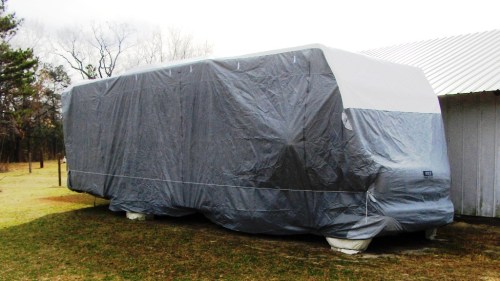


 Take a minute to think about the water system on your RV.
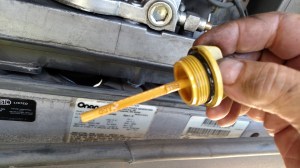
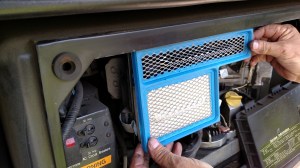
 Your RV generator is powered by an internal combustion engine. When it comes to maintenance internal combustion engines need two things to operate properly and help prolong engine life; it needs fresh air and clean oil.
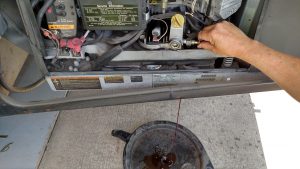 The first step is to start and run the generator for a couple of minutes. This warms the oil up making it easier to drain the crankcase. Just keep in mind the engine, oil filter and oil itself will be warm so be careful. Shut the engine off, place a drain pan under the oil drain plug or tube and drain the old oil.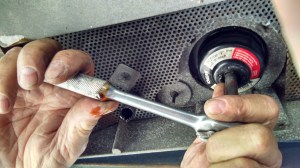








 Welcome back to another edition of
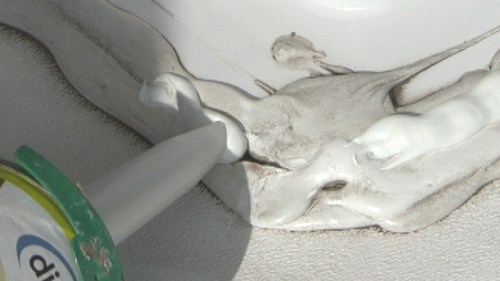
 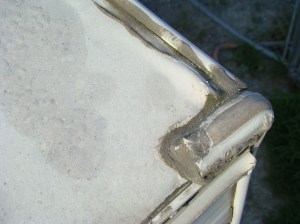 Water damage is at the top of my list for maintenance concerns on RVs, and most of the time it originates at the roof. There are numerous reasons for this. Every where the manufacturer cut a hole in the RV roof has the potential to leak, and everywhere the sidewalls and end caps meet the roof is another potential source for water leaks. When you add all the twisting and flexing that takes place on the road it’s just a matter of time before sealants give way to water intrusion and damage.


 Getting to your favorite camping destination is half the fun as the saying goes, but getting there safely is the most important thing.
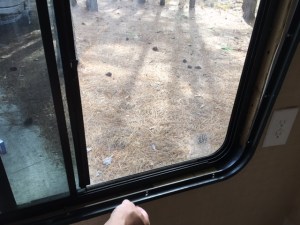 On the interior window frame you will notice numerous screws. These screws secure the clamp ring to the frame and seal the window. Using the correct screwdriver tip remove all of the screws. Keep in mind when the screws are removed the window is ready to come out, so it’s a good idea to have somebody outside too. If the sealant around the window is still good it might take a little effort to get the window out, but it will come. You might also notice some small spacers around the window frame. Make a mental note where the spacers are located for installation.
 With the window and interior paneling removed I could assess the damage. In lots of cases it’s necessary to remove the corrugated aluminum sheeting from the exterior too, but the damage was minimal and I was able to make repairs to the window frame and wall from the interior. After the framing repairs were completed and new insulation was installed I cut and stapled new interior paneling to fit around the window opening. Now it’s time to re-install the window.
 One common problem RV owners experience is odors coming from the black water holding tank. Most of the problem is associated with the way the RV toilet and black water holding tank is designed. RV holding tanks have a vent pipe going from the tank to the roof of the RV. The holding tank odors accumulate in the tank and can’t really be vented outside because there is no air pressure to help force the gasses (odors) up and out of the roof vent. When the air pressure is higher inside the holding tank, than it is inside the RV, the odor escapes into the RV by way of the toilet when you flush it. Some of this can’t be prevented but there are a couple things that help. One is to use plenty of water. The water level in your holding tank will help control odors. You need to get in the habit of adding more water to the holding tank whenever you flush the toilet. It is important you keep the water level above the contents of the holding tank to help control odors. And of course holding tank treatments help too. Another problem is people don’t add enough water after they empty the holding tanks. You need to know what size holding tank you have and make sure you add enough water to completely cover the bottom of the tank, at a minimum, every time you empty the tank. And there are aftermarket roof vents designed specifically to help pull the gasses from the tank and vent it outside.
 After reading one of my articles a person wrote asking why I promote the use of a weather radio during RV trips. His logic was, in today’s world you have smart phones with weather apps, TV and satellite dishes. Why would you need a weather radio too?
 We recently had a situation occur that reaffirms my thoughts on this subject. There was bad weather moving through the area where we live and the potential for tornadoes and flooding was high. We live in a remote area, away from cell phone towers, and our phone reception is spotty at best. As the bad weather approached we lost our Direct TV satellite reception and the weather app on my phone did not work.
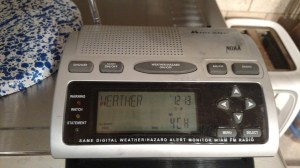 I plugged the weather radio in and set the audible alert notification. In less than 20 minutes of turning the radio on, the alert sounded and a weather service warning, from a local National Weather Radio office reported a tornado was spotted less than 15 miles from our house. Needless to say without the weather radio we would not have a clue a tornado was spotted, or the location and path of the tornado.
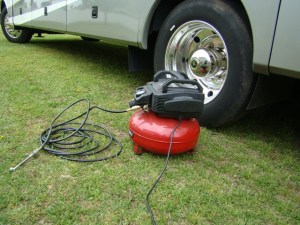 Today I want to talk briefly about RV tires. I cannot tell you how many times I hear tires get blamed for a tire blow-out. The truth is if you dig a little deeper the tire itself is usually not the cause for a blow-out.
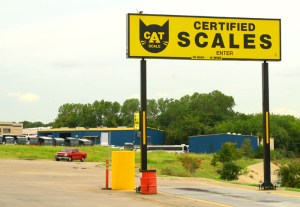 As an RV owner it is your job to make sure the tires are properly inflated for the load. The first step is to determine the actual load that is on the tires. The only way to do that is to have the fully loaded RV weighed, preferably by individual wheel position. If you discover a tire is overloaded you need to lighten or redistribute the load. After you know the actual loads you can go to the tire manufacturer’s load and inflation tables to see what the correct inflation pressure for the load is. This inflation pressure might be different from the information on the certification label and that is okay, but keep in mind you should never exceed the maximum inflation pressure that is on the tires sidewall.
 I have owned and camped in nearly every type of RV there is. When asked my favorite type RV my response is a motorhome, based on convenience, but a truck camper is my favorite for camping in general. I relate my passion for truck campers back to my days in the military. In 1984, as a young Maintenance Warrant Officer, I was stationed with the 3/36th Mechanized Infantry Battalion, 3rd Armored Division in West Germany. This assignment would turn out to be one of the most challenging during my military career. The Cold War was still going strong, and we spent months out of the year deployed on field training exercises. My primary job was to keep all our assigned wheeled and tracked vehicles operational during this rigorous training schedule, and to oversee vehicle recovery operations.
 Welcome back to another edition of
  If you’re like me you enjoy using your RV as much as possible throughout the year. This includes taking RV trips during the colder winter months so you can enjoy the beautiful winter scenery and activities like, snow-skiing, ice-fishing and snowmobiling. Winter RV trips are lots of fun, especially when you and the RV are prepared for the cold weather.

 A problem I see at campgrounds, and that I get asked about frequently, is how to back a trailer into a campsite. Backing a trailer is perhaps the most nerve-racking part of owning a travel trailer or 5th wheel trailer. For some RV owners just the thought of backing the trailer prevents them from taking trips and enjoying their RV. Based on my observations at campgrounds backing a trailer has probably contributed to more than one failed marriage too.

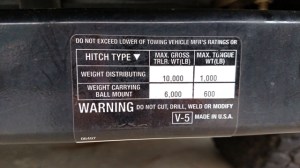 There has always been confusion over hitch receiver ratings as it pertains to tow vehicle ratings. This confusion applies to both motorhomes towing a dinghy and vehicles towing trailers. For example, when I was selling RVs many years ago, I had a customer who just bought a brand new truck and came to the dealership to purchase a travel trailer. He and his wife found the perfect trailer on the sales lot and wanted some pricing information. When I researched the truck’s tow capacity I informed them the truck was not rated to tow the weight of the trailer they selected. The customer told me that was impossible because the truck salesperson showed him a label that stated the truck could tow 10,000 pounds. He proceeded to take me out to his truck and pointed at the label on the hitch receiver that read 10,000 pounds. I explained, the 10,000 pounds on the label identifies what the hitch receiver is rated at, but the truck itself was only rated to tow 6,000 pounds. It was a very expensive lesson on finding the RV you want to purchase before you purchase the tow vehicle.
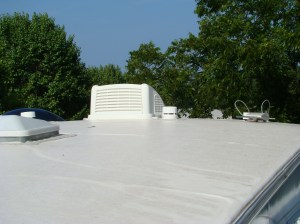
 When you go camping in your RV there are items that are essential like a drinking water hose and RV sewer hoses, and there are nice to have items like a GPS designed for RVs and a portable BBQ grill. Today I want to talk about consumable items that you should always have on-hand in your RV.


 It’s no secret that for years truck manufacturers have competed for truck sales by boasting to have the “best in class” tow ratings. I have always taken issue with this because the consumer is the loser in the end. Vehicles go through rigorous testing to determine tow ratings, but the problem is there was never a standard manufacturers had to meet or measure the vehicle against to determine a vehicle’s tow rating. Unfortunately this results in biased outcomes.

 1) RV Tire Tips: During the warmer months of the year I constantly remind folks not to check tire pressure when the tires are hot, meaning after the RV was driven more than one mile. Hot weather and hot tire temperatures cause tire inflation to increase. But something seldom discussed is what happens to your tire pressure when the mercury plummets? The answer is, when it’s cold outside the air pressure in your tires drops 1 to 2 pounds for every 10 degree drop in temperature. This means if you have not checked the tire pressure in your RV tires since that trip you took last August your tire pressure could be dangerously underinflated when you head out for the holidays. The best advice I can offer is to get in a habit of checking and adjusting tire pressure monthly, so it is correct regardless of the temperature. This applies to your automobiles as well.
 2) Automotive Antifreeze Tips: When you talk about RVs and antifreeze most folks think about the RV antifreeze used to protect the RV water system from freezing. We will talk about that type of antifreeze in a minute but first I want to talk about the automotive antifreeze used in the RV or tow vehicle engine’s coolant system. Glycol antifreeze does several things to help protect your engine:
 Welcome back to another edition of
 Hi and welcome back to another edition of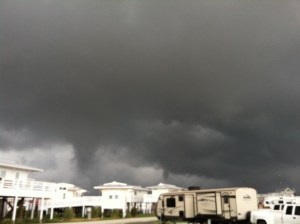




 Mark Polk
 RV 101® / RV Education 101®
You must be logged in to post a comment.